EN

EN
We assist you in understanding the trademark application process, trademark rights protection, and the associated legal risks.
We provide professional legal advice on trademark searches, registration applications, oppositions, invalidation, revocation, licensing, and infringement disputes, helping you establish a comprehensive trademark protection strategy and safeguard your brand rights and interests.
Thorough trademark clearance searches evaluating availability and registrability, with conflict identification to reduce infringement risk.
Before beginning the trademark logo design process, we need to understand key information about your brand, including its positioning, story, core values, and the keywords you wish to convey. This enables us to develop a design that more closely reflects your brand’s unique characteristics.
After understanding your brand’s characteristics and positioning, we develop the design concept based on your brand’s needs, including the visual style, color palette, graphic elements, and overall direction. We then prepare initial design proposals that explain the concepts and how they are presented, helping you select the direction that best aligns with your brand identity.
Once the design direction has been confirmed, we make the final adjustments to finalize the trademark design and overall visual presentation, complete the final version, and prepare it for trademark registration and brand use.
We assist you with trademark-related procedures, including preparing and filing trademark applications in compliance with all applicable legal requirements, to maximize the likelihood of successful registration.
A trademark is a distinctive sign that identifies and distinguishes goods or services and may include words, names, slogans, logos, symbols, designs, colors, sounds, and more.
Filing a trademark application is the first step toward securing trademark rights. Before filing, select the appropriate classes of goods or services based on the brand name, intended use, and business activities.
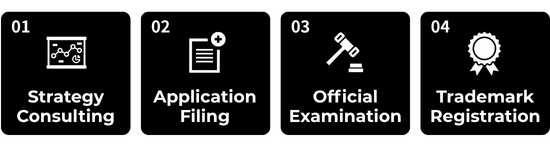
The application process typically includes document preparation and filing, formal examination, substantive examination, and publication. Once the application meets all legal requirements, the applicant obtains trademark registration rights.
After a trademark application enters substantive examination, if it fails to meet the requirements for registration because of trademark similarity, lack of distinctiveness, violation of trademark laws and regulations, or other grounds for refusal, the Taiwan Intellectual Property Office will issue a notice stating the grounds for refusal.
We will assist in analyzing the reasons for refusal, evaluating the case’s feasibility, preparing responses, submitting supporting evidence, or adjusting the application strategy to increase the likelihood of successful trademark registration. If the application is ultimately refused, we can also assist with subsequent appeals and other available remedies to protect your trademark rights and interests.
Once a trademark has been approved for registration, the owner obtains exclusive trademark rights that are protected under trademark law and have exclusive legal effect.
However, obtaining trademark rights is only the beginning of brand protection. The trademark must continue to be used and properly managed to avoid revocation of the registration for three consecutive years of non-use, while also reducing the risks of third-party preemptive registration of similar trademarks, infringement, counterfeiting, and other related risks.
Trademark rights are subject to a statutory term of protection and must be renewed before expiration to maintain their validity. We provide expiration monitoring and trademark renewal application services, with timely reminders before the renewal deadline to ensure your trademark rights remain valid and provide stable support for your brand identity and market positioning.
During the trademark publication period, if another party’s trademark application is subject to grounds for refusal, such as lack of distinctiveness, conflict with others’ prior rights, or a likelihood of confusion or misidentification among relevant consumers, an opposition may be filed in accordance with the law.
We assist with case analysis, evidence preparation , and opposition proceedings to protect your brand rights and interests.
In opposition, invalidation, revocation, and other trademark dispute proceedings, we help analyze the case, identify the relevant legal grounds, prepare written responses, and submit supporting evidence to protect your trademark rights and interests.
After a trademark is registered, a revocation application may be filed under the law if the trademark has not been used for three consecutive years, has not been used in connection with the designated goods or services, or if any other grounds for revocation under the Trademark Act apply.
We assist with reviewing trademark use, organizing evidence of use, and handling the procedures necessary to maintain the validity of your trademark rights.
If a registered trademark violates the provisions of the Trademark Act—for example, if grounds for refusal existed at the time of registration, the trademark was registered in violation of the first-to-file or prior-rights principle, or the registration infringes another person’s right to a name, copyright, or other legitimate rights or interests—an invalidation action may be filed in accordance with the law.
We assist with analyzing the basis for trademark registration, assessing relevant legal issues, gathering supporting evidence, and preparing the necessary application documents for invalidation proceedings. If a trademark is challenged by another party through an invalidation action, we also assist in preparing responses and presenting relevant legal arguments to protect your trademark rights and interests.
Trademark assignment is the transfer of rights in a registered trademark from the trademark owner to another party, allowing the assignee to acquire those rights.
Regardless of whether the change in rights arises from a trademark sale, corporate merger or acquisition, change in corporate structure, inheritance, or other circumstances, an assignment recordation should be completed accordingly.
We assist with reviewing the relevant legal relationships, preparing the required application documents, and handling the recordation procedures to ensure that the trademark assignment is legally valid and effective.
A trademark owner may authorize another party to use a registered trademark within the agreed scope and, as needed, record the trademark license with the Taiwan Intellectual Property Office.
Trademark licensing involves determining the scope and duration of use, the applicable goods or services, and the rights and obligations of both parties. We help confirm the license terms, prepare the relevant documents, and handle the recordation procedures to ensure the trademark use relationship is clearly defined and to reduce the risk of future disputes.
If the trademark owner’s name, company name, address, or any other registered information changes, file an application for amendment of recordal with the Taiwan Intellectual Property Office to keep the trademark records accurate and complete.
We assist in confirming amendment details, preparing the required application documents, and handling the relevant procedures to ensure that the trademark rights information matches the actual status and to maintain effective management of the trademark rights.
Proactive monitoring services safeguarding your trademarks against unauthorized use, with enforcement strategies to protect your brand.


ZONGYING International Trademark Firm
bonnie@zy-mark.com
1F., No. 3, Lane 80, Guangfu N. Rd., Songshan Dist., Taipei City 105, Taiwan (R.O.C.)
+886-2-27992201
TOP


